CARA 2.0: Engineering a Low-Cost, High-Performance Robot Dog for Senior Design
Introduction
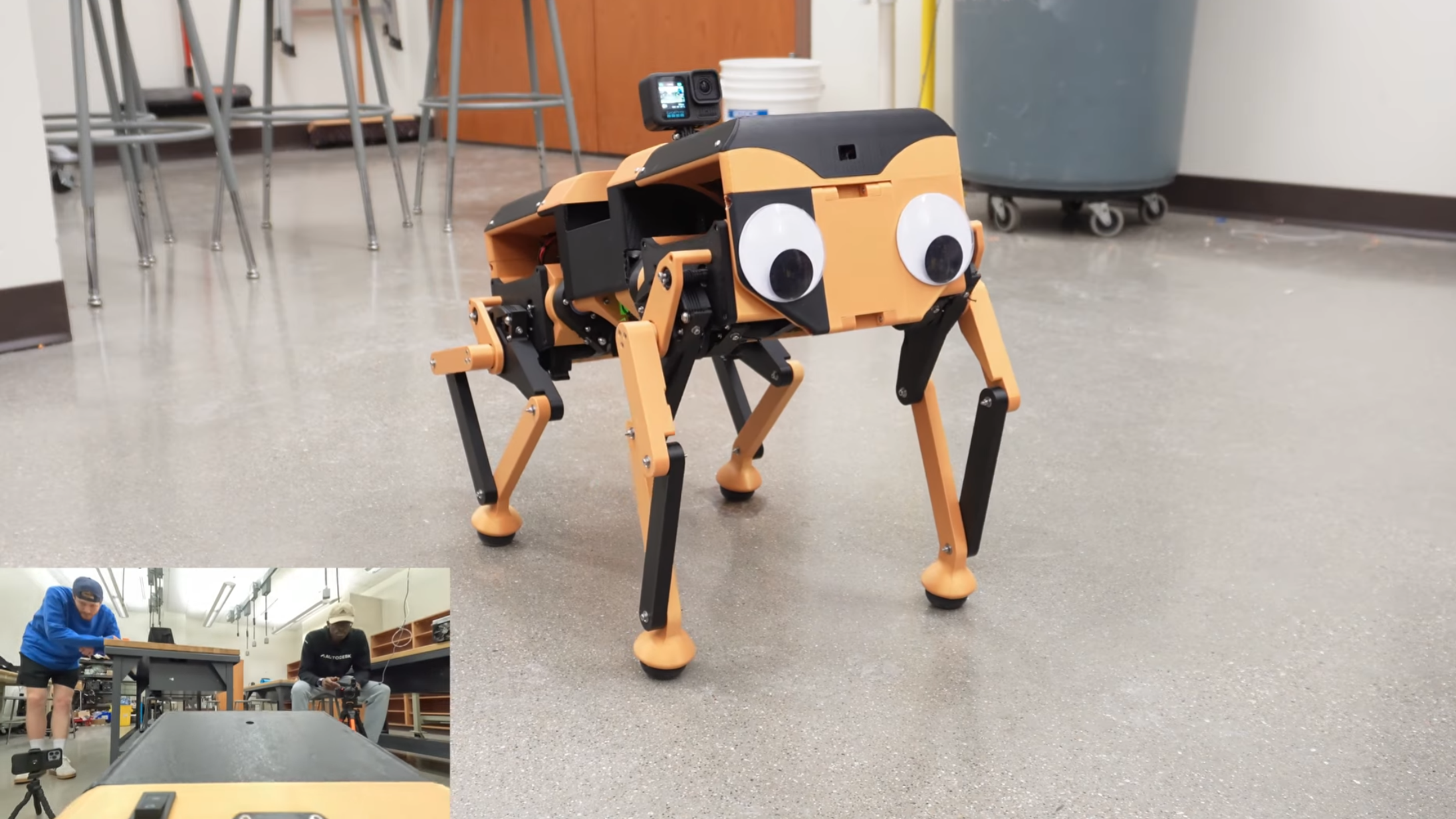
Building a robot dog is no small feat, but for mechanical engineering senior Aaed Musa and his team, it was the perfect capstone project. With years of experience crafting quadruped robots, Musa set out to create CARA 2.0—a machine that balances affordability, durability, and agility. The project wasn't just about technical prowess; it had to meet real-world customer expectations, pushing the team to innovate on a tight budget.
Design Requirements and Customer Feedback
From early conversations with potential buyers, the team established three critical targets: a price around $1,000 USD, a weight under 20 pounds, and a robust, long-lasting design. These constraints shaped every decision, from material choices to motor selection. Unlike earlier prototypes, CARA 2.0 demanded the rigor of a product destined for actual use—not just a lab experiment.
Capstan Drives and Motor Modifications
To keep costs low, the team reused the capstan drive concept from the original CARA. These drives, 3D-printed in resin, actuate the joints efficiently and reduce part complexity. Powering them were inexpensive brushless drone motors. However, those motors are optimized for speed, not torque. The solution? Rewinding the copper wires with more turns—a tedious process that roughly tripled torque output without breaking the bank. Durability tests showed one joint motor running continuously for over 1,000 hours with no visible wear, validating the team's engineering choices.
Homeless but Smart: Pseudo-Absolute Positioning
CARA 2.0 avoids the expense of absolute encoders. Instead, each motor homes itself on startup by extending each joint to its mechanical limit. A spike in motor current signals that the limit is reached, allowing the controller to register the home position. A delightful side effect: the dog performs a natural, lifelike stretching motion every time it boots up, adding personality to its startup sequence.
Movement and Performance Upgrades
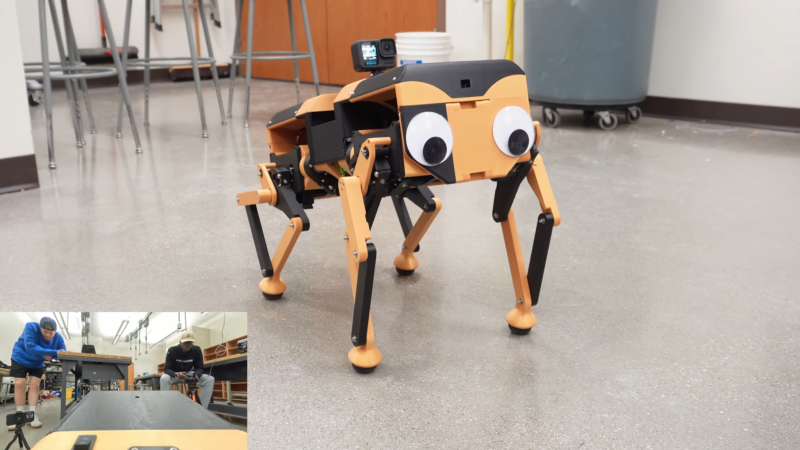
Compared to its predecessor, CARA 2.0 takes shorter, quicker steps and uses angled step movements to pivot far more rapidly. Early tests revealed a leftward skew caused by an asymmetric leg design. Once fixed, the robot could walk straight, move sideways, turn in place, crouch, jump, and maintain balance on inclined surfaces. This level of agility is rare in low-cost quadruped robots.
Testing and Graduation Results
The final price landed at $1,450—exceeding the initial $1,000 target, but still remarkably low for such a capable machine. Every other customer requirement was met. Most importantly, the entire team graduated with a working, impressive robot dog. CARA 2.0 stands as a testament to practical engineering under real-world constraints.
Conclusion and Related Projects
The success of CARA 2.0 highlights how capstan drives and clever motor modifications can deliver high performance without a huge budget. For another take on capstan-powered robot dogs, check out Stanley. Also, TOPS, one of Musa’s earlier designs, offers another perspective on affordable quadruped robotics. CARA 2.0 proves that senior design projects can push boundaries—and still fit a student budget.