From Electric Vehicles to Grid Batteries: Ford's Strategic Pivot
After a turbulent period in its electric vehicle (EV) business, Ford is shifting gears and leveraging its battery expertise to enter the grid-scale energy storage market. This move represents a significant pivot for the automotive giant, which took substantial financial losses from its EV missteps. Below, we explore the key questions around this transition, examining what went wrong, why Ford is now targeting grid storage, and what this means for the energy landscape.
What exactly went wrong with Ford's EV strategy?
Ford's initial EV push faced several critical setbacks that led to massive financial losses. The company poured billions into developing models like the Mustang Mach-E and F-150 Lightning, but production issues, supply chain constraints, and lower-than-expected demand created a perfect storm. Cost overruns on battery plants, coupled with price cuts to compete with Tesla, eroded margins significantly. In 2023 alone, Ford's EV division reported losses exceeding $4 billion. Additionally, the automaker struggled with quality control, leading to recalls that damaged consumer trust. These missteps forced management to rethink their approach, ultimately deciding to slow down EV production targets and redirect resources into areas where their battery manufacturing capacity could generate more immediate returns.
How big was the financial hit for Ford?
The financial impact was severe. During the worst period, Ford's Model e (its EV unit) posted operating losses of around $1.3 billion per quarter. Cumulative losses from 2022 to 2024 are estimated to exceed $10 billion. The company had to cut planned EV spending by $12 billion and push back production timelines for several models. Stock prices suffered, with shares dropping nearly 20% in 2023 as investors grew skeptical. Ford's credit rating also faced pressure from rating agencies. To stem the bleeding, Ford imposed hiring freezes, reduced production shifts at EV plants, and repurposed some of its battery manufacturing capacity for other uses—a decision that directly paved the way for the grid storage pivot. The experience forced Ford to become more pragmatic about the pace of electrification and look for alternative revenue streams from its battery investments.
What is the grid-scale battery storage market and why is it attractive?
Grid-scale battery storage refers to large battery systems—often using lithium-ion technology similar to EV batteries—that store electricity for use when demand is high or renewable generation is low. These systems help stabilize power grids, reduce reliance on fossil fuel peaker plants, and enable higher penetration of solar and wind energy. The market is booming: BloombergNEF forecasts global installations to grow from 100 GWh in 2023 to over 1,000 GWh by 2030, driven by the need for grid reliability and decarbonization. For Ford, this market offers stable revenue streams through long-term contracts with utilities, shorter capital cycles than vehicle development, and the ability to repurpose existing battery manufacturing lines. Unlike the volatile EV market, grid storage faces less direct competition from traditional automakers and enjoys strong policy support through tax credits under the Inflation Reduction Act.
What advantages does Ford have in grid storage?
Ford possesses several key advantages in the grid storage space. First, it has invested heavily in battery manufacturing infrastructure—including the BlueOval SK joint venture plants in Kentucky and Tennessee—giving it access to high-volume, cost-competitive production. Second, the company has deep expertise in battery pack integration, thermal management, and power electronics from its EV experience. Third, Ford's existing relationships with utilities and fleet operators (through its commercial vehicle division) provide ready-made channels for grid storage projects. Fourth, some of its current battery capacity is underutilized due to slower EV demand, making repurposing for stationary storage a financially smart move. Finally, Ford can leverage its brand trust and scale to negotiate favorable supply agreements, potentially undercutting specialized battery storage startups. These factors make the grid storage market a natural extension—and a pragmatic hedge against EV volatility.
What challenges might Ford face in entering grid storage?
Entering the grid-scale battery storage market is not without challenges. One major hurdle is that competition is already fierce from established players like Tesla, Fluence, and LG Energy Solution, who have years of experience in stationary storage and long-standing utility contracts. Ford will need to build a dedicated sales and service team for the energy sector, which differs markedly from automotive sales. Another challenge lies in the different technical requirements: grid storage batteries prioritize cycle life and safety over energy density, requiring different cell chemistry and management software than EVs. Additionally, the market is subject to regulatory complexities, interconnection delays, and volatile raw material prices. Ford's manufacturing cost advantages may be offset by the need to certify products for grid standards. Finally, the pivot could dilute Ford's focus on its core automotive business, especially if the storage division fails to deliver expected profits quickly. Overcoming these obstacles will require careful strategy and significant investment in energy-specific R&D.

Can Ford's EV and grid storage efforts work together?
Yes, there are significant synergies between Ford's EV business and its grid storage ambitions. Both rely on similar battery cell technology, enabling Ford to achieve economies of scale by ordering more cells from its joint venture factories. The same engineering teams that optimize battery packs for vehicles can adapt designs for stationary use. Ford can also develop vehicle-to-grid (V2G) capabilities, where EV batteries feed energy back into the grid—a concept that blurs the line between automotive and grid storage. Moreover, by entering grid storage, Ford gains valuable data on battery aging and performance under varied usage patterns, which can feed back into improved EV battery warranties and lifespan predictions. The two businesses can share procurement, logistics, and recycling infrastructure. Ultimately, a well-integrated strategy could make Ford a dual-purpose energy company, reducing overall risk while tapping into the global push for electrification across both transport and power sectors.
What is Ford's timeline for entering the grid storage market?
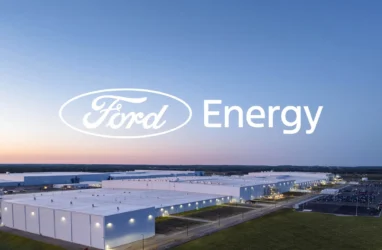
Ford has already signaled its intentions by forming a dedicated energy storage division and repurposing portions of its battery production lines. In early 2025, the company announced pilot projects with several utility partners in the Midwest and California, deploying 50 MWh of storage units by mid-year. Full commercial production of Ford-branded grid storage products is expected by late 2026, with initial offerings in the 2-10 MWh range for commercial and industrial customers. The company plans to scale up to utility-scale projects (100+ MWh) by 2028, leveraging its joint venture capacity. Ford has also hinted at bidirectional charger integration for its EV lineup, with the first V2G-capable vehicles rolling out in 2027. While no specific revenue targets have been disclosed, internal documents suggest aiming for $2 billion in annual grid storage sales by 2030—a modest but meaningful addition to Ford's overall revenue, which could help offset ongoing EV development costs.
What does Ford's pivot mean for the broader energy industry?
Ford's entry into grid-scale storage signals a broader convergence between the automotive and energy sectors. As one of the largest global automakers, Ford's move will likely accelerate battery production volumes, driving down costs for all storage applications. This could make renewable energy integration more affordable and expedite the retirement of coal and natural gas plants. It also puts pressure on traditional energy storage companies to innovate and compete with automotive-scale efficiencies. Policymakers may interpret Ford's pivot as validation of grid storage's strategic importance, potentially leading to more supportive regulations. On the flip side, it raises questions about resource allocation: if more battery capacity goes to grid storage, could it slow EV adoption? Ford's balancing act will set a precedent for other automakers, like GM and Volkswagen, who are watching closely. Ultimately, this pivot underscores that the battery revolution is not just about cars—it's about reshaping how energy is stored and distributed across the entire economy.