The Unfreezing Enigma: A Complete Guide to Antarctica's Don Juan Pond
Overview
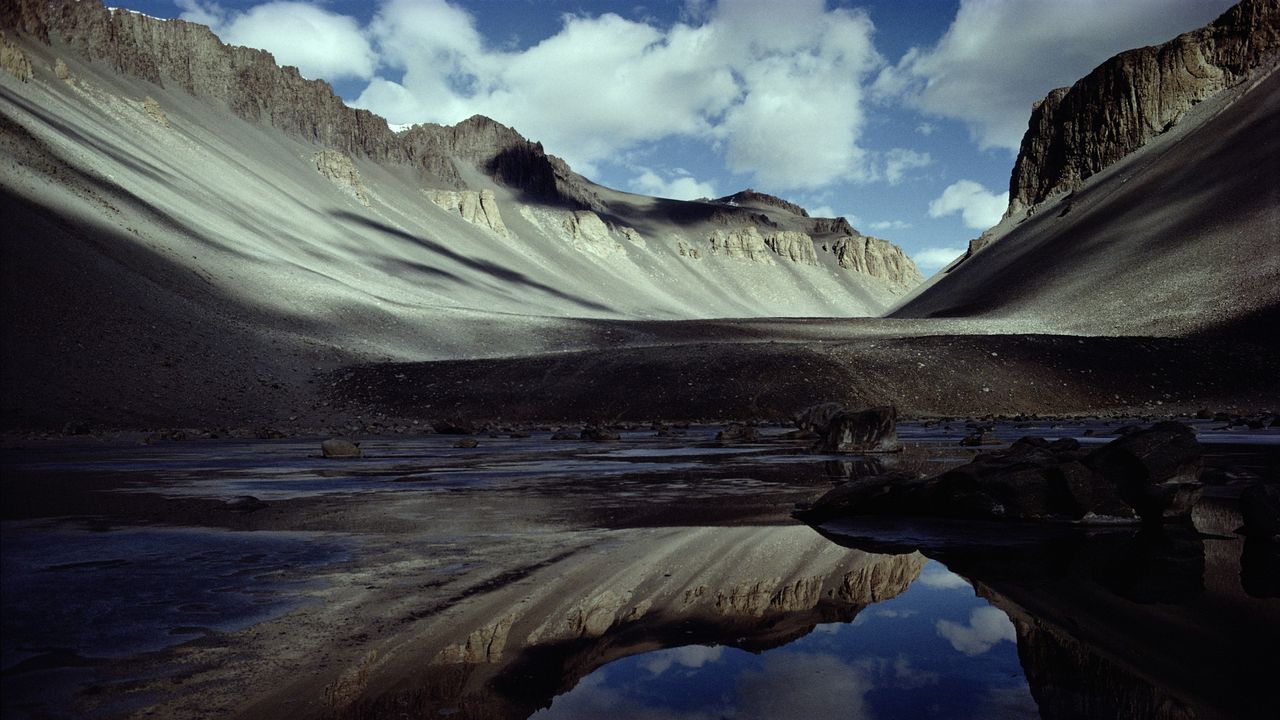
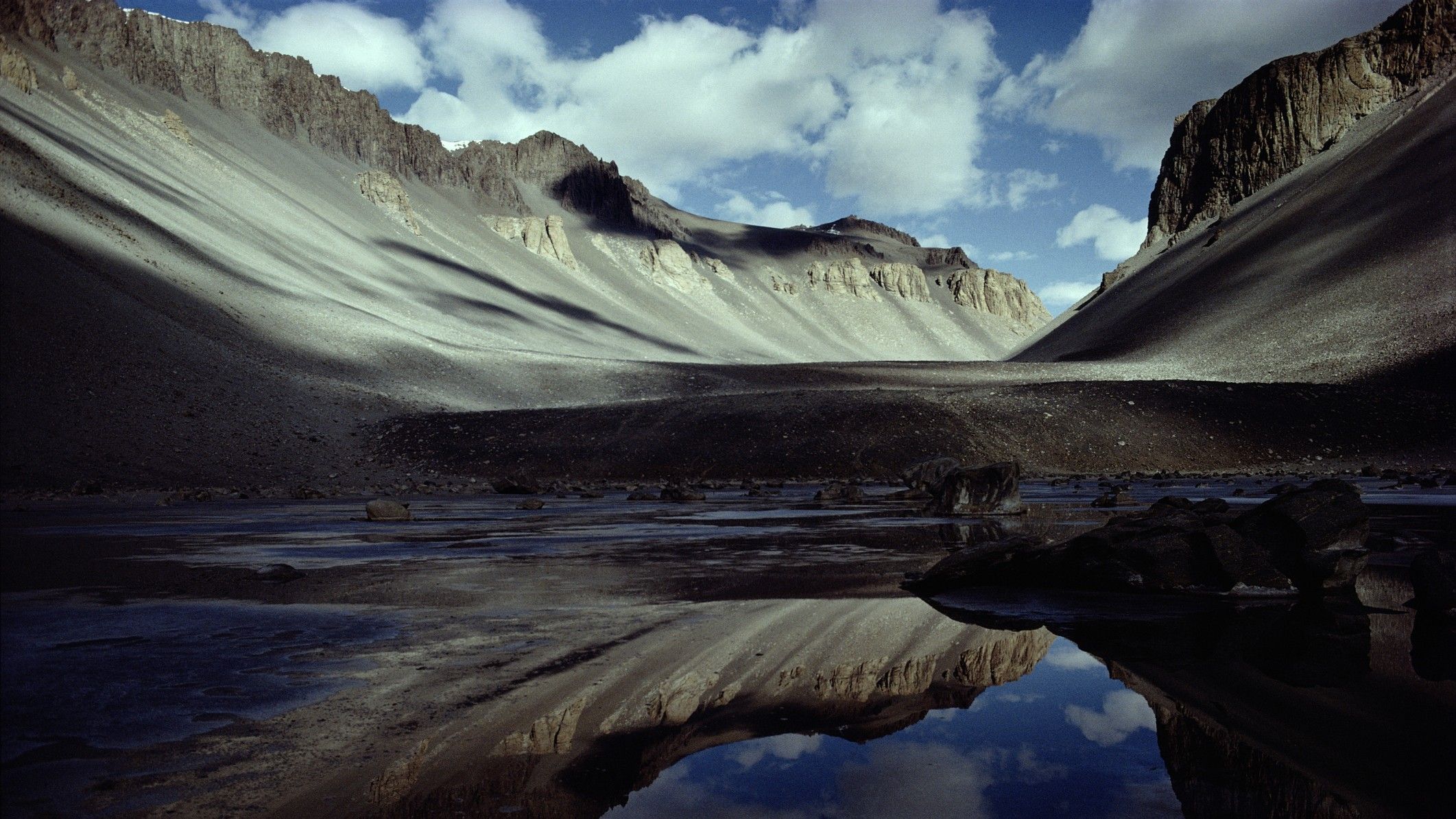
Don Juan Pond is a small, shallow body of water nestled in the Wright Valley of Antarctica's McMurdo Dry Valleys. Despite its modest size—roughly 300 meters long and 100 meters wide, with an average depth of only a few centimeters—it holds a world record: it is one of the saltiest bodies of water on Earth. The pond's brine is so concentrated with calcium chloride that it remains liquid even when air temperatures plummet to -58°F (-50°C). This guide unpacks the science behind this phenomenon, exploring the chemistry, physics, and geography that make Don Juan Pond a natural laboratory for extremophiles and a fascinating case study for anyone curious about extreme environments.
Prerequisites
Before diving into the details, you should be comfortable with:
- Basic chemistry: understanding of solutions, solutes, and colligative properties (especially freezing point depression).
- Earth science basics: familiarity with Antarctica's climate, the McMurdo Dry Valleys, and how polar deserts differ from temperate regions.
- Mathematics: ability to work with simple equations (e.g., van 't Hoff factor calculations).
- Reading scientific data: interpreting charts or tables of salinity, temperature, and freezing point.
No specialized equipment is needed—just a curious mind and a willingness to explore the limits of water's liquid phase.
Step-by-Step Explanation: Why Don Juan Pond Never Freezes
1. Understand the Location and Climate
Don Juan Pond sits in the hyperarid McMurdo Dry Valleys, where average annual temperatures hover around -20°F (-29°C). The region receives less than 10 cm of snowfall per year—an actual desert. The pond is fed by groundwater seeping through nearby bedrock, which dissolves minerals from the surrounding dolerite and granite. Over millennia, evaporation (though slow) has concentrated these dissolved salts, especially calcium chloride (CaCl₂).
2. Grasp the Role of Calcium Chloride
Calcium chloride is a hygroscopic salt, meaning it readily absorbs moisture from the air. But its key property here is its dramatic effect on freezing point depression. For a non‑electrolyte solute, the freezing point depression (ΔTf) is given by ΔTf = i·Kf·m, where:
- i = van 't Hoff factor (for CaCl₂, ideally 3: one Ca²⁺ and two Cl⁻ ions).
- Kf = cryoscopic constant of water (1.86 °C·kg/mol).
- m = molality of the solution.
Don Juan Pond’s brine has an estimated salinity of over 400 g/L (roughly 40% salt by weight). At that concentration, the freezing point of the solution plunges to approximately -50°C (-58°F). Since the coldest temperatures recorded in the Dry Valleys rarely drop below -55°C, the pond remains liquid—barely—on the warmest side of the formula.
3. Compare with Other Antarctic Lakes
Other famous Antarctic lakes, such as Lake Vostok or Lake Ellsworth, stay liquid under thick ice sheets due to geothermal heat and pressure, not extreme salinity. Don Juan Pond’s uniqueness lies in its exposed, shallow surface that is in direct contact with the frigid atmosphere. Only its extraordinary salt content—primarily calcium chloride rather than sodium chloride—prevents freezing. Calcium chloride is more effective at lowering freezing point than sodium chloride because it dissociates into three ions instead of two.
4. Perform a Simple Freezing Point Calculation (With Code)
Let’s model the freezing point depression using Python. (Don’t worry if you’re not a programmer—the logic is straightforward.)
# Freezing point depression for Don Juan Pond brine
Kf = 1.86  # °C·kg/mol for water
i = 3       # ideal van 't Hoff factor for CaCl2
molality = 7.5  # approximate molality of the pond (moles solute per kg solvent)

delta_T = i * Kf * molality
freezing_point = 0 - delta_T

print(f"Calculated freezing point: {freezing_point:.1f} °C")
print(f"In Fahrenheit: {freezing_point * 9/5 + 32:.1f} °F")
Running this code yields about -41.9°C (-43.4°F)—close to the observed -50°C. The difference arises because the pond also contains smaller amounts of other salts (MgCl₂, NaCl) that contribute further to the depression. In reality, the brine is a complex cocktail, but the core principle holds.
5. Explore the Mysteries and Research Methods
Scientists study Don Juan Pond to understand how life—or prebiotic chemistry—might survive in extreme environments. Despite its harshness, the pond hosts microbial communities and is a model for possible brines on Mars. Field researchers collect samples using sterile techniques, measure conductivity (which correlates with salinity), and deploy weather stations to track temperature and humidity. Satellite imagery helps monitor the pond’s area, which has been shrinking in recent decades due to regional warming.
A key mystery remains: where does all the calcium chloride come from? Recent studies suggest a deep groundwater source that dissolves ancient marine deposits, not merely surface weathering.
Common Mistakes and Misconceptions
- Mistake: Thinking the pond is pure water. – Actually, it's a supersaturated brine with a density higher than seawater. It feels syrupy and oily to the touch.
- Mistake: Confusing Don Juan Pond with Lake Vostok. – While both are Antarctic lakes, Vostok is subglacial and kept liquid by pressure and geothermal heat; Don Juan is surface-exposed and relies on salinity.
- Mistake: Assuming it never freezes at all. – It can freeze on extremely cold nights or if salt concentration drops, but under typical Dry Valley conditions it remains liquid.
- Mistake: Overlooking the calcium ion. – Many people think sodium chloride (table salt) is the most effective freeze‑preventer. In reality, for equal masses, calcium chloride depresses the freezing point more because it produces more ions.
Summary
Don Juan Pond is a natural wonder that defies the bitter cold of Antarctica through extreme salinity, particularly a high concentration of calcium chloride. By understanding freezing point depression—a colligative property—we can calculate why the pond remains liquid down to nearly -58°F. Its study carries implications for astrobiology, climate change monitoring, and even industrial applications (e.g., de‑icing roads). The next time you see liquid water in the most unlikely of frozen landscapes, remember: sometimes it takes a little chemistry to beat the chill.